Los Angeles Wolf range hood and ventilation service
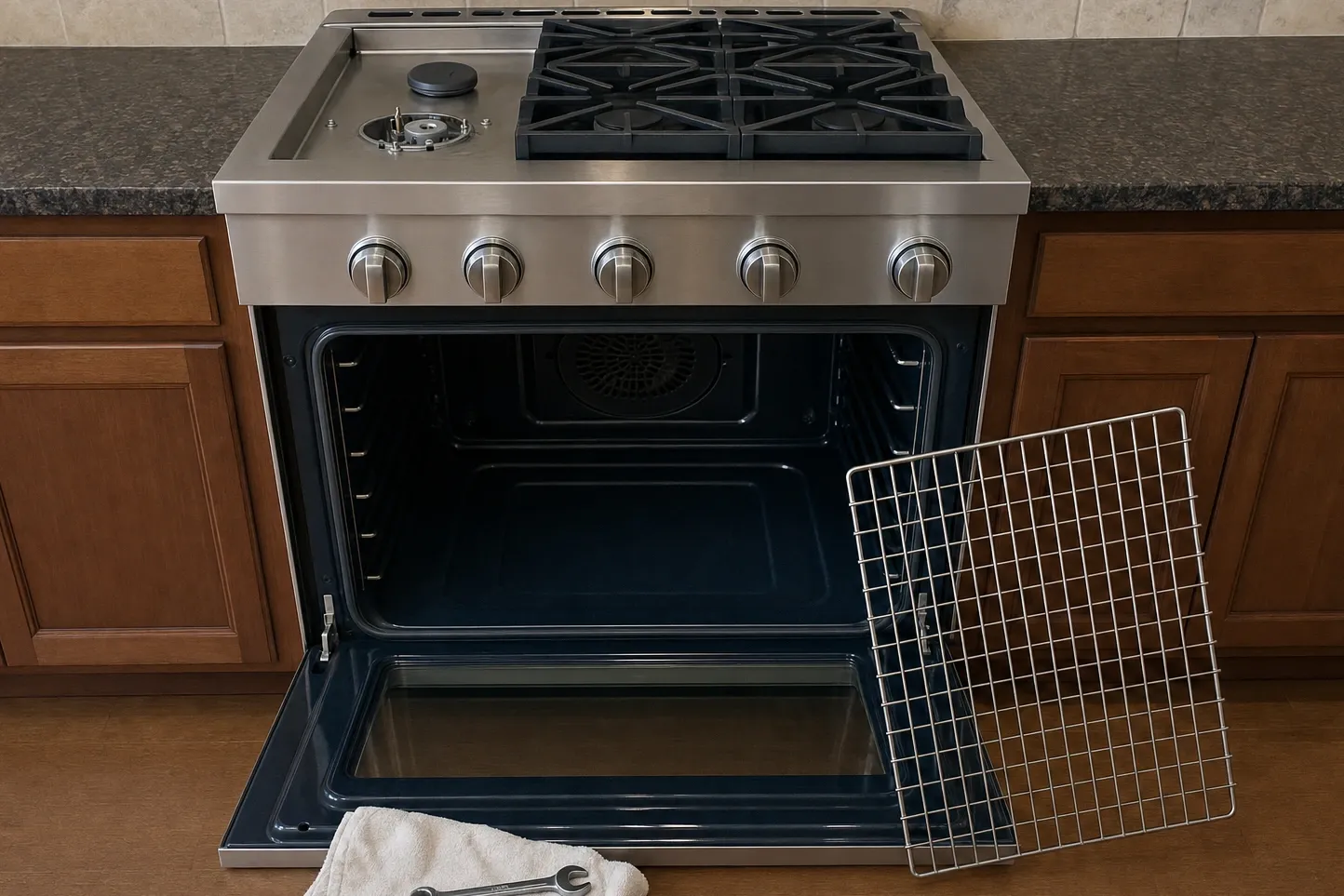
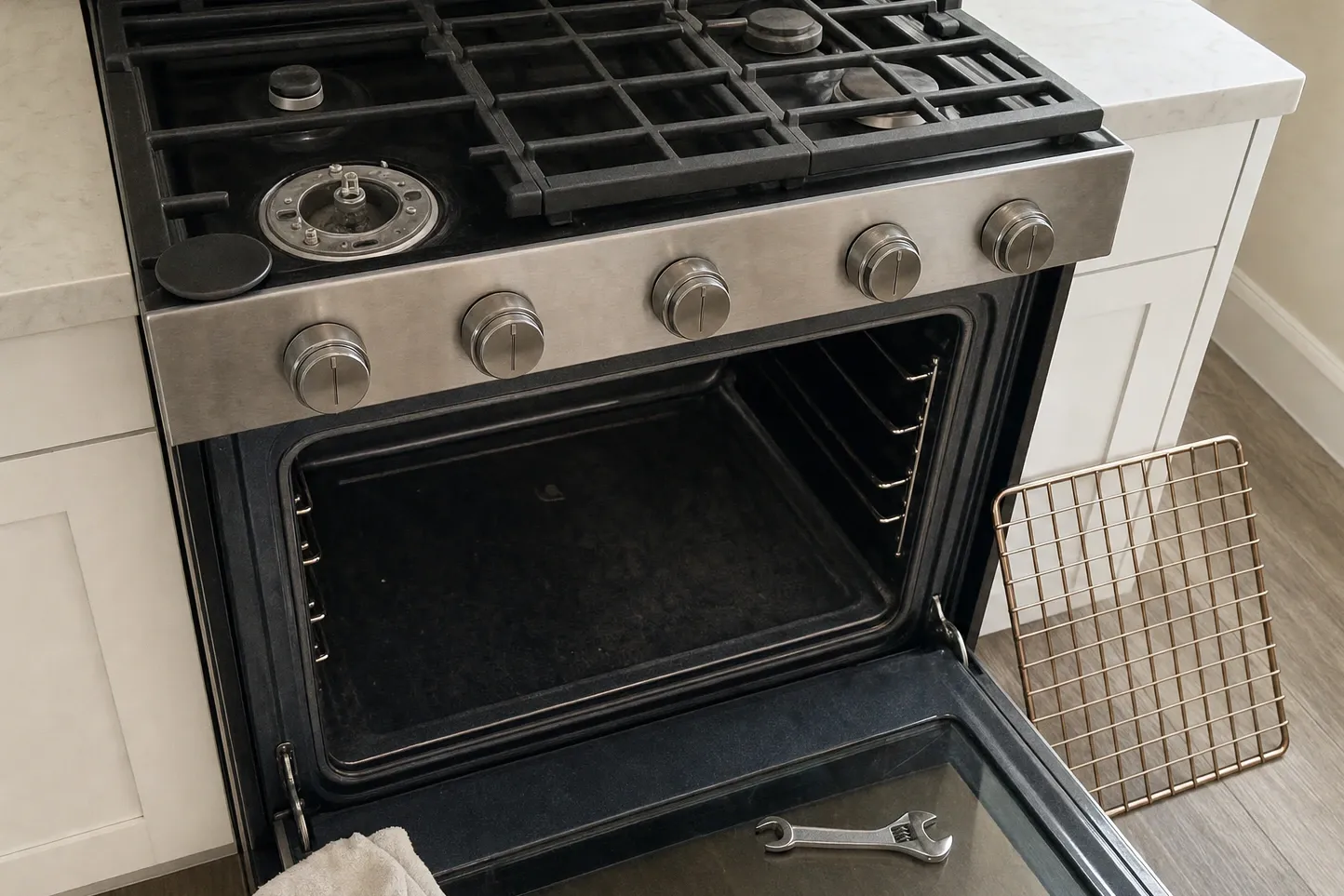
The cooktop under the hood, which is where every ventilation call really starts. Hoods, liners, downdrafts, in-line and roof blowers across the east side and the Valley — named, measured, and priced before anything comes apart.
Name the part, see what it does and what it costs to put right. A hood that hums is usually a capacitor rather than a motor, and a kitchen full of smoke is usually a duct rather than a hood that was bought too small — so this site says which is which before anybody quotes you.
- Diagnosis $89 flat, taken off the repair
- Visits 8 am to 8 pm, any day of the week
- Phone answered 24/7
- Scope Wolf hoods, downdrafts and cooking — no refrigeration
Call to clear air
What actually happens, in order
Six marks, and no clock on any of them. You are told the price of the repair before a panel comes off, and the last mark is somebody standing under the hood checking it pulls — not a note on a form.
-
You call
(310) 626-4008, answered 24/7. Say what the hood is doing now and what it sounded like a month ago.
-
Questions on the phone
Which shape of hood, and where the blower lives: in the canopy, in the duct or outside. That is what decides where the fault-find starts.
-
The $89 diagnosis
A visit and a proper fault-find. Airflow at the filters, voltage at the motor, capacitance on the component that starts it.
-
A figure before anything comes apart
One number covering the part and the labour. You hear it before a panel is removed, and nothing is ordered until you have agreed it.
-
Repair, or the part put on order
What the repair needs is either fitted on the visit or ordered, and you are told which of the two it is before anyone leaves.
-
The pull checked in front of you
Filters back the right way round, every speed run, the damper watched opening. A hood that starts is not the same thing as a hood that works.
Parts index
Name the part before anyone quotes you for it
Twenty components of a Wolf hood, liner or downdraft, each with the same four columns: what it is, where it sits, how it fails and what checks it. Six of them are below; the rest are one click further in.
- Hood Blower Motor The motor that turns the blower wheel — in the canopy, in the duct, or outside on a roof or a wall. Read it
- Blower Run Capacitor A small cylinder wired beside the blower motor, there to get the wheel moving from standstill. Read it
- Hood Speed Control The bank of contacts behind the control strip that decides how much of the supply reaches the blower. Read it
- Backdraft Damper A flap that lets air out and will not let weather back in, set where the duct leaves the hood. Read it
- Remote Roof or Wall Blower The blower option that is mounted outside, at the far end of the duct. Read it
- Downdraft Lift Motor The motor under the counter that raises the vent stack and lowers it again after cooking. Read it
Symptom first
Most hood faults are not the thing they look like
| Reads like | Actually is |
|---|---|
| A dead motor | A capacitor that can no longer start it |
| A broken switch | A blower at the far end of the duct with no power |
| A hood that is too small | A duct run the blower cannot push against |
| A jammed vent stack | A lift drive that is no longer being told to run |
A hood that hums is far more often a failed capacitor than a failed motor, and a kitchen that fills with smoke is far more often a duct the blower cannot push against than a hood that was bought too small. Working out which one it is costs a meter and twenty minutes, not a new hood.
The whole symptom tableBooking
Say what the hood does, not what you think has failed
Which shape of hood, where the noise is, and whether the lights still work. Those three answers pick the parts that ride along, and picking them right is the difference between one visit and two.
Diagnosis $89, taken off the repair. Someone comes out 8 am to 8 pm, any day of the week; the line is picked up 24/7.
What this covers
Ventilation first, then the rest of the kitchen
Hoods, liners and downdrafts are what this line is built around, and the three cooking repairs under them are the calls that arrive in the same kitchens. Nothing here is refrigeration: sealed systems are a separate trade, and this line says so on the phone rather than turning up and finding out.
- 01
Wolf Range Hood Repair
Wall, island, ceiling and liner hoods, and downdrafts — the blower wherever it sits, the capacitor that starts it, speed controls, lamps, baffles, dampers and the duct above the cabinets.
- Blower sounds strong but grease still settles on the cabinets
- Hood trips the breaker as soon as it steps up a speed
- 02
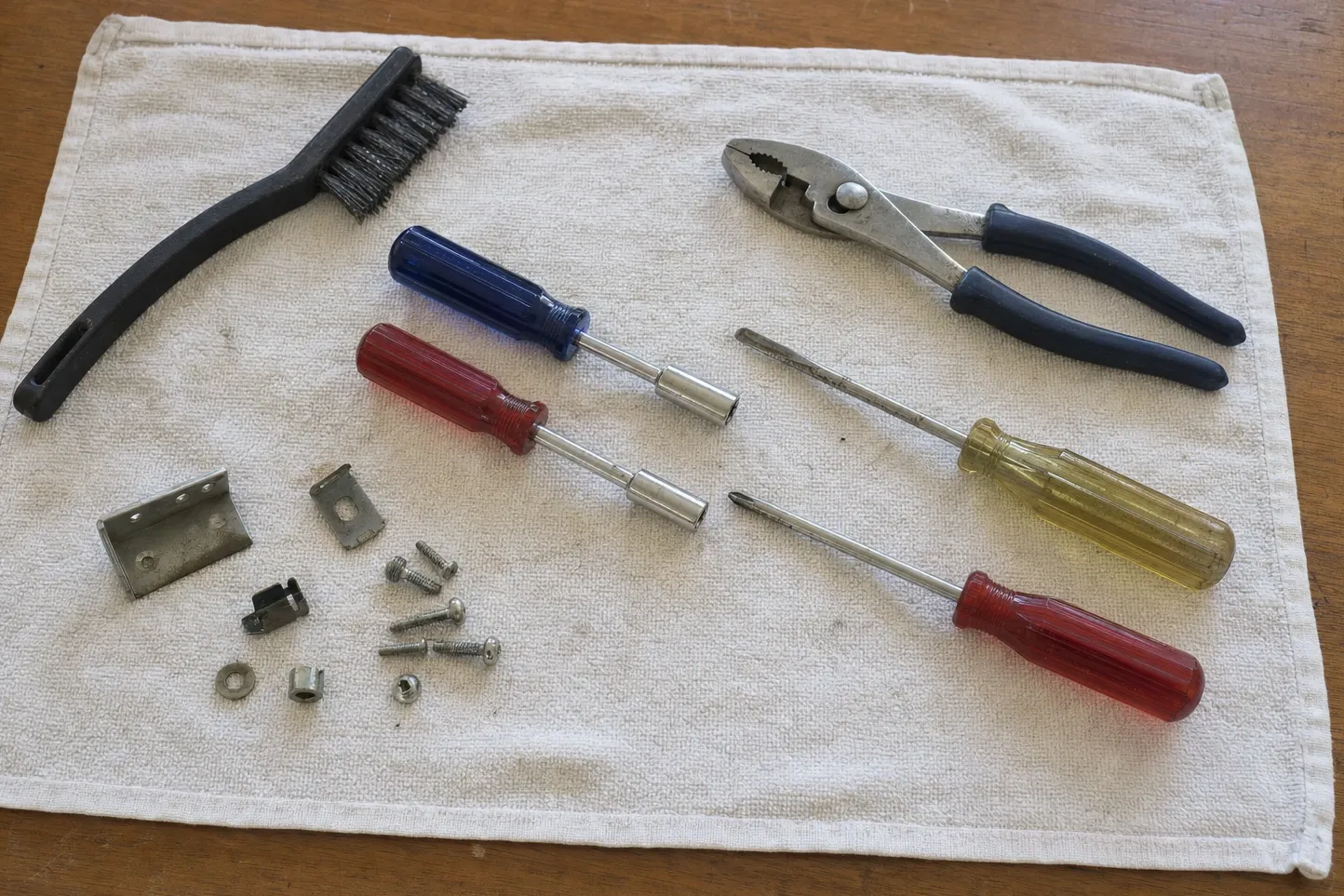
Wolf Range Repair
Dual-fuel and all-gas Wolf ranges — ignition that will not catch, a simmer that will not hold, a cavity that stays cold, a panel that has locked itself out.
- A burner clicks for a minute before it catches, or never catches at all
- Burners light normally while the oven stays stone cold
- 03
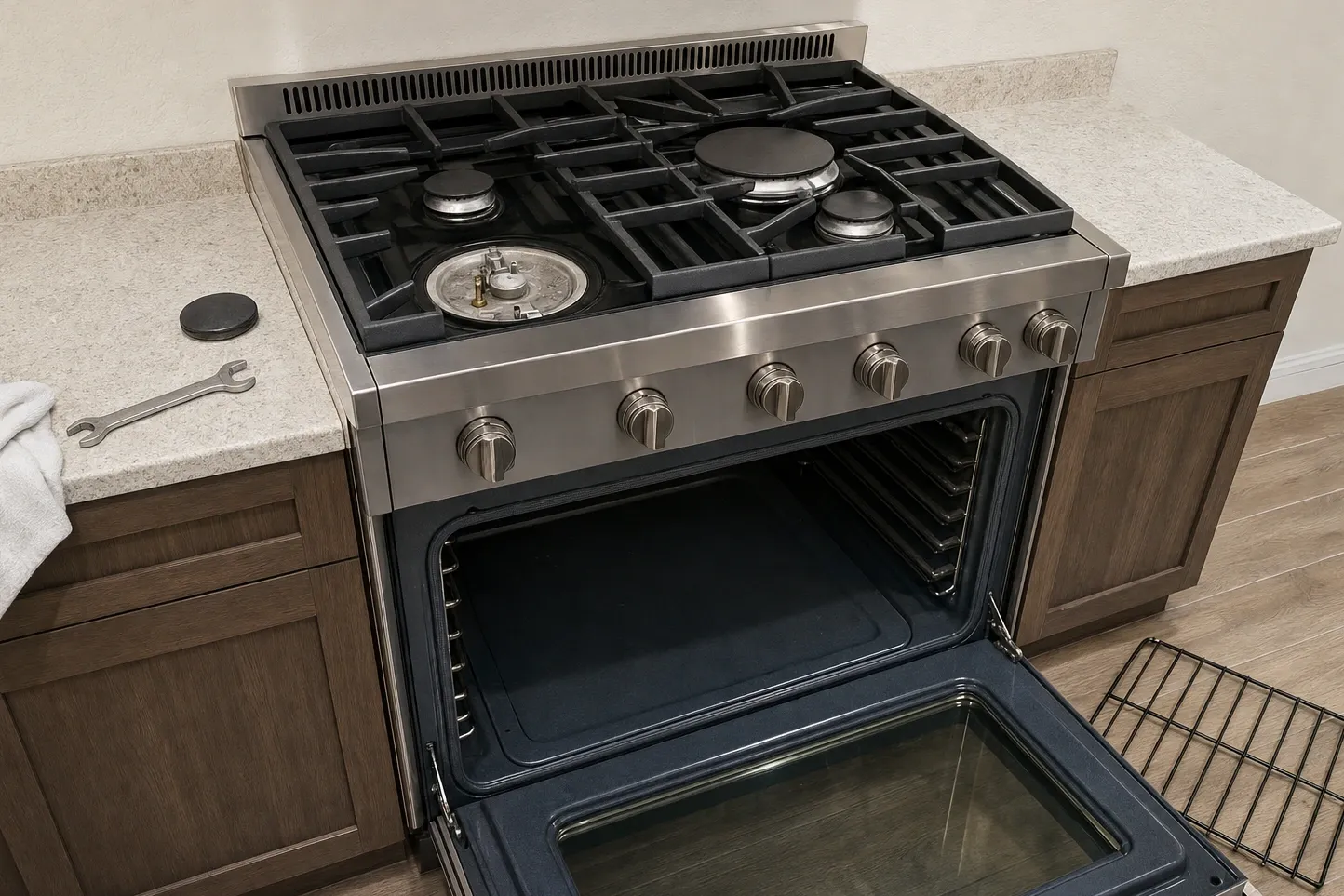
Wolf Oven Repair
Built-in Wolf wall ovens and steam ovens: heat that has drifted off the dial, convection that has stopped circulating, a seal past its best, a board that will not clear.
- Preheat crawls and the cavity never actually reaches the set temperature
- Bakes unevenly, forty degrees apart between the front and the back
- 04
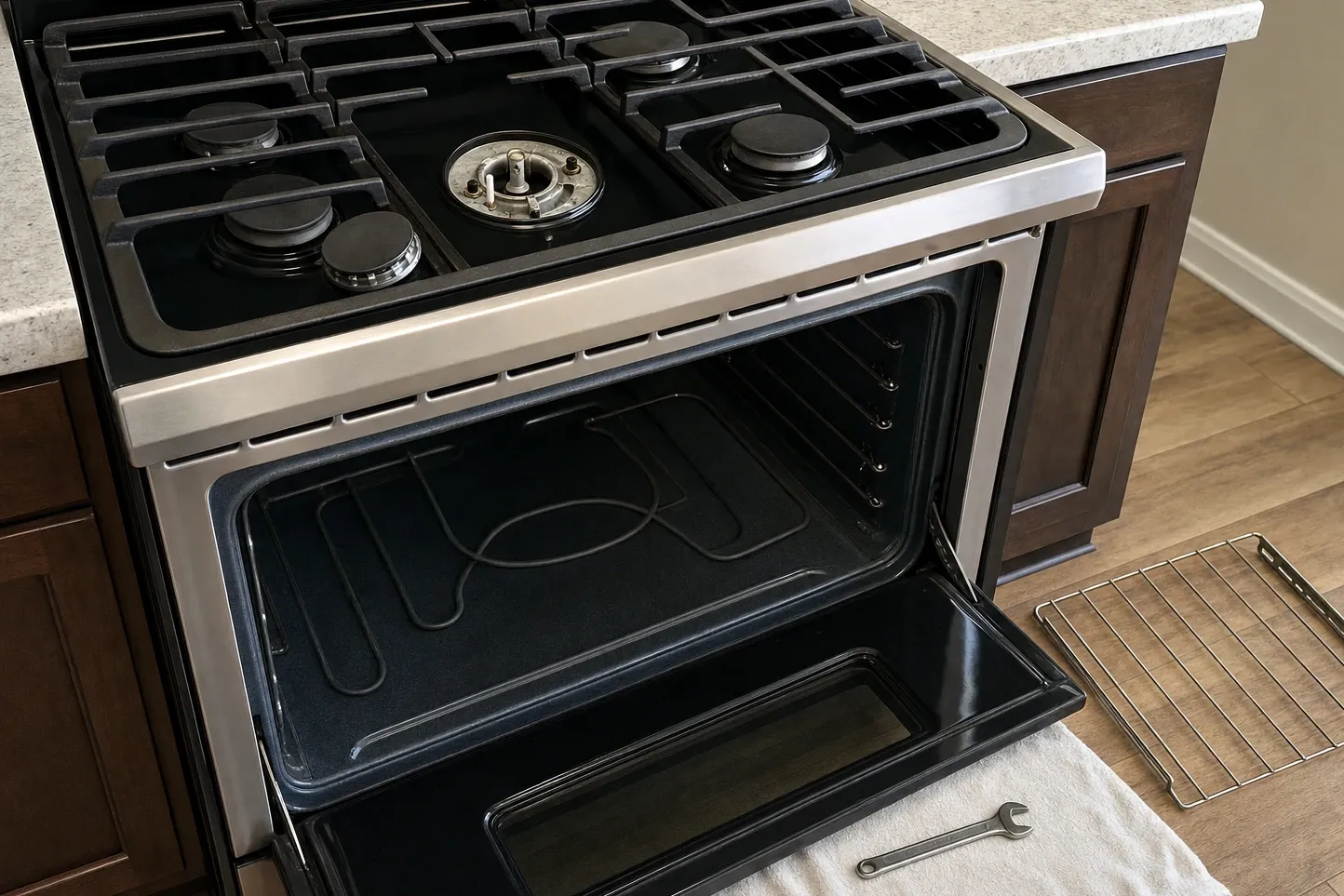
Wolf Cooktop Repair
Wolf cooktops and rangetops: spark electrodes, sealed burners, the valves behind them, relays and the touch panel across the front.
- Flame burns yellow and leaves soot on the bottom of pans
- Igniter keeps sparking for minutes after the flame is already up
Service areas
Eight neighbourhoods on one run
Two clusters and a ridge in the middle. Echo Park, Silver Lake, Los Feliz, Atwater Village and Eagle Rock on the east side; Studio City, Sherman Oaks and Valley Village over the top. The ridge is why the duct runs on the two sides look nothing alike: hillside attics one way, roof space over an opened-up ranch house the other.
- Silver Lake — where the route is anchored
- Plotted from each neighbourhood's real coordinates
- The ridge. It is a hill, not a road, and it ends where the drawing ends — which is why the last two on the list are a different drive again.
- Silver Lake 90026 Hillside Spanish-revival and mid-century houses on stair streets, mostly one good 30-inch or 36-inch range doing all the work.
- Los Feliz 90027 1920s Spanish, Tudor and period-revival homes where a modern Wolf range or wall oven has been fitted into an original kitchen.
- Studio City 91604 Post-war ranch houses off Ventura Boulevard, opened up in remodels so the cooktop and the hood share one island.
- Sherman Oaks 91403 Valley ranch homes and hillside builds south of the boulevard, heavy on 48-inch ranges and double wall ovens that cook nightly.
- Echo Park Hill houses reached off stair streets, where the kitchen sits under a low attic and the duct has to find its way out through the framing.
- Atwater Village Craftsman bungalows on flat lots, cooktop against an outside wall and a duct run that is short but narrow all the way.
- Eagle Rock Bungalows and small Spanish houses where a modern hood has been hung on a wall that was never ducted for one.
- Valley Village Post-war ranch houses opened into one room, so the hood is over an island and the blower has moved into the roof.
Reviews
Left by Los Angeles kitchens
Wolf cooking calls, in the words they were sent in.
5.0/ 51,508 reviews
Left zone shut down every time my heavy pot went on. The fan under the glass was choked with grease and dust off the hillside. Cleaned and tested, no board needed.
Neal F.Silver Lake
Simmer setting roared or blew itself out, nothing between. He read the manifold pressure, found it high for the block, and set the bypass screws. Took two trips because the first part was wrong.
Delroy P.Sunset Junction
Cooktop kept beeping and quitting mid-simmer, which nobody could explain. The pan sensor coil had a rubbed-through lead where it crossed the frame. He repaired it and tested every zone before leaving.
Junie S.Sherman Oaks
Straight answers
Things worth knowing before you call
Nothing here is a sales answer. If the honest answer is that a repair is not worth it, that is the one you will get on the phone too.
Not on the list? (310) 626-4008
Which kinds of Wolf ventilation do you take?
Wall, island and ceiling hoods, liners built into a custom canopy, and downdrafts that rise out of the counter. The blower can sit in the canopy, in the duct or outside on a roof or a wall, and all three are part of the same call. Wolf Repair Los Angeles, (310) 626-4008.
The hood sounds strong but grease still lands on the cabinets. Is the motor dying?
Usually not. A blower that still sounds strong is still turning, so the air is being stopped somewhere else: loaded baffles, a damper that no longer opens fully, a crushed transition, or a wall cap seized shut with old grease. That gets measured at the filters before anything is priced.
What does the visit cost, and when do I hear a price?
The call-out is $89 and it buys a full diagnosis. Hood work has no published band here, because a blower is not an oven fan; the repair is quoted once the fault is found, as one figure for parts and labour, and the $89 comes off it when you approve the work.
When can somebody come out?
Visits run 8 am to 8 pm, any day of the week, and the phone is answered 24/7, so a call after dinner books a slot instead of reaching a recording. Silver Lake, Los Feliz, Studio City, Sherman Oaks, Echo Park, Atwater Village, Eagle Rock and Valley Village are all on the run.
What should I have ready when I call about a hood?
Which shape it is: wall, island, ceiling, liner or downdraft. Then where the noise comes from, the canopy itself, the ceiling above it or outside. Add whether the lights still work and whether every speed button does the same thing. Those four answers usually decide which part travels.
Is there Wolf hood repair near me?
If you are in Silver Lake, Echo Park, Los Feliz, Atwater Village or Eagle Rock on the east side, or in Studio City, Sherman Oaks or Valley Village over the ridge, then yes — those eight are the sector this line works. Wolf Repair Los Angeles, (310) 626-4008.
Do you take refrigeration calls as well?
No. This line is Wolf cooking equipment and its ventilation: hoods, liners, downdrafts, blowers, ranges, rangetops, cooktops, wall and steam ovens and griddles. Refrigeration is a different trade with different gauges and different parts, and saying so on the phone is cheaper for you than a guess.
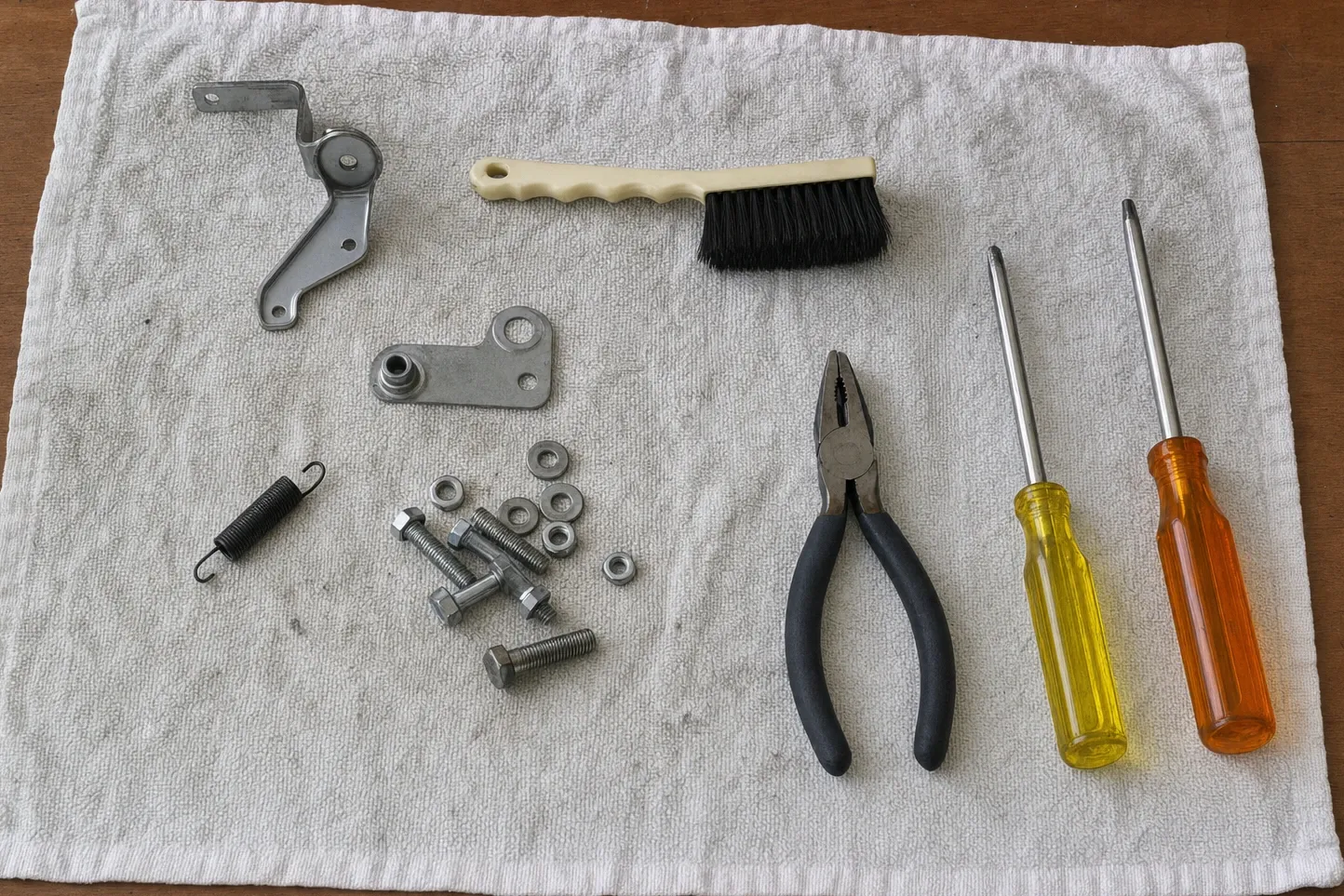
A door hinge, its spring and the hardware that holds it. An oven that stops holding heat past 300 is more often this than a board.
How this works
One brand, one trade, four appliances
Wolf equipment is not general appliance work with a different badge on it. Manifold pressure set for the block, a griddle plate that has to come off square, spark modules that read fine on a meter and still will not carry a flame, steam ovens that scale up on Los Angeles water. Working on the same four things every day is the only reason any of that is quick.
There is no showroom and no forms on this site. You call, or you pick a slot on the booking page. What happens after that is short enough to list.
- 01 You describe the fault Model number, what it does and when it started. That is normally enough to narrow it to one family of faults before anybody is standing in the kitchen.
- 02 It gets measured, not guessed Manifold pressure, sensor resistance, a probe on the rack, the actual voltage at the relay. Gas cooking equipment fails in ways that read the same from the outside and are not the same fault.
- 03 You hear the number first The diagnosis comes with a price for the repair before anything is opened up further or ordered. If it is not worth fixing, that gets said plainly.
- 04 It is tested before anyone leaves A burner that lights once is not a repair. Full preheat, every zone, the door lock cycled — whatever the original complaint was, run again in front of you.